



TL;DR:
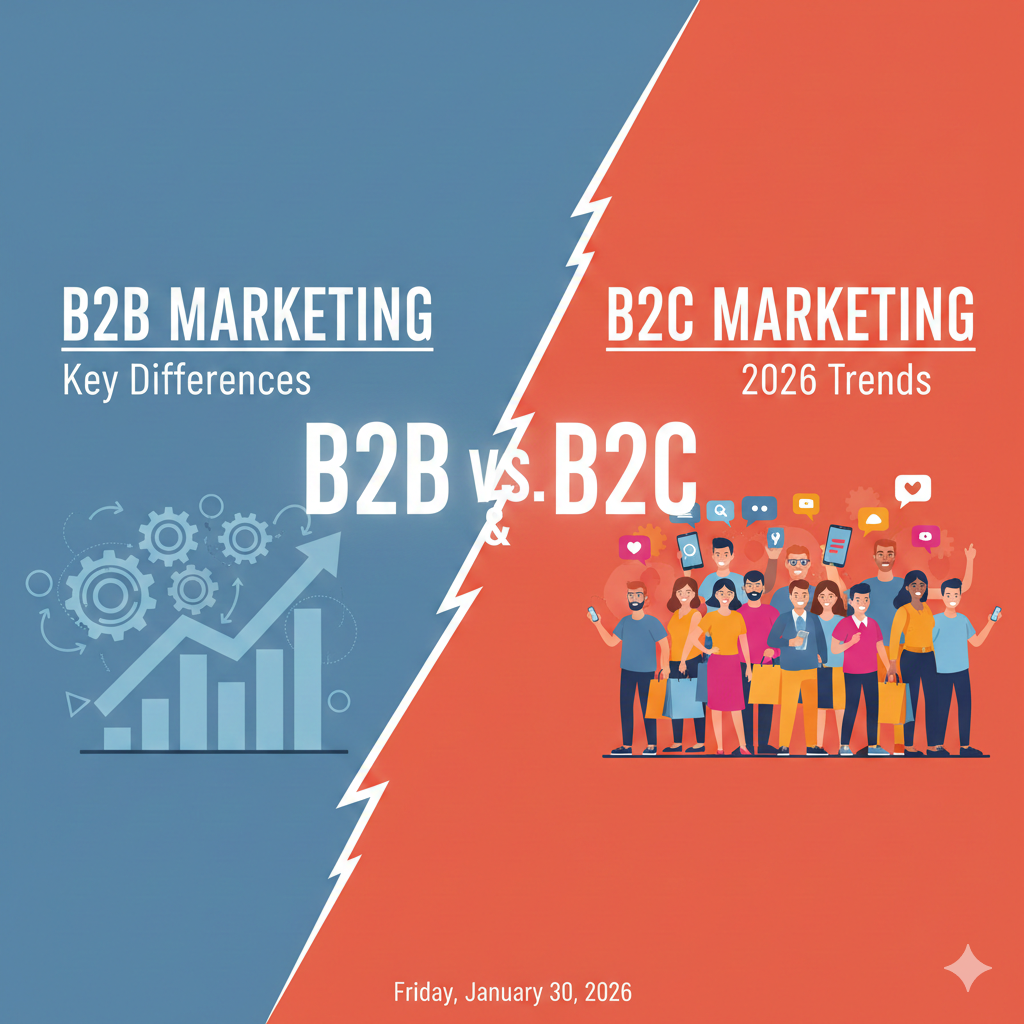
- Definition of B2B and B2C marketing: B2B (business-to-business) focuses on transactions between companies, while B2C (business-to-consumer) targets final consumers directly.
- Marketing Objectives: B2B goals include building long-term relationships and efficiency, while B2C aims to stimulate immediate purchases through emotions and branding.
- Strategies and Channels: B2B marketing utilizes channels like LinkedIn and email, while B2C leverages social media and visual advertising; strategies influence the choice of channels to use.
- Communication: In B2B, the communicative approach is based on data and detailed information, while B2C focuses on emotional and engaging messages, with personalization for each segment.
- Emerging Trends in 2026: Technological innovations and changes in consumer behavior are reshaping the landscape, supported by new regulations.
- Measuring Success: Different metrics dominate B2B and B2C: the former evaluates ROI and lead generation, while the latter focuses on engagement and direct sales; the use of data is essential for optimizing strategies.
Introduction
The difference between B2B and B2C marketing is a fundamental theme in 2026. Understanding these distinctions is essential for anyone working in marketing. I have experienced its evolution over time and can confirm how crucial it is to adapt. While B2B focuses on deeper relationships and direct interactions, B2C aims to engage the public on a massive scale through emotions and stories. This understanding is the key to developing effective strategies. In this article, we will explore how these two worlds have evolved and what trends are emerging in the current landscape. Get ready to discover everything you need to excel in modern marketing!
What is the definition of B2B and B2C marketing?
Have you ever wondered how companies communicate and interact with their customers depending on whether they are businesses or final consumers? The answer lies in B2B (Business to Business) and B2C (Business to Consumer) marketing strategies. The difference between B2B and B2C marketing is fundamental to understanding how companies achieve their goals and communicate their value.
What is B2B marketing?
B2B marketing refers to all activities intended to sell products or services from one company to another. In this context, businesses seek to establish lasting relationships and trust. B2B marketing strategies tend to be more oriented toward concrete data and measurable results, as purchasing decisions are often made by workgroups and involve detailed analysis.
What is B2C marketing?
B2C marketing, on the contrary, concerns the sale of products or services directly to consumers. Here, the focus is on emotion and the customer experience. Campaigns are designed to attract attention, stimulate desire, and generate an immediate response. B2C companies tend to use more evocative messages and attractive promotions.
What are the main differences between the two?
- Target: B2B addresses corporate decision-makers, while B2C focuses on final consumers.
- Procurement: In B2B, the purchasing process is often long and complex, unlike B2C, where decisions can be rapid.
- Relationship: B2B relies on long-term relationships, while B2C is more focused on the single transaction.
How do B2B and B2C marketing objectives differ?
Understanding the difference between B2B and B2C marketing is crucial for defining effective strategies. Marketing objectives can vary radically depending on the type of audience and the commercial approach. Knowing these objectives not only facilitates the creation of targeted campaigns but also helps maximize the return on investment.
What are the primary objectives in B2B?
- Relationship Building: Establishing lasting bonds with other businesses to promote loyalty.
- Increasing Sales: Focusing on acquiring new customers and expanding the existing customer portfolio.
- Customer Education: Informing customers about the products or services offered, emphasizing solutions to their specific problems.
- Lead Generation: Generating qualified leads through events, webinars, and digital campaigns.
What are the primary objectives in B2C?
- Customer Satisfaction: Ensuring satisfaction through a positive customer experience.
- Brand Awareness: Increasing brand recognition among the mass public.
- Direct Sales: Stimulating immediate purchases through offers and promotions.
- Retention: Building customer loyalty to encourage repeated sales over time.
How do objectives impact the marketing strategy?
- For B2B, strategies tend to be long-term, focused on relationships and market consolidation.
- In B2C, campaigns often aim for quick results, leveraging emotional marketing and engaging promotions.
What are the marketing strategies used in B2B versus B2C?
In the world of marketing, understanding the different strategies employed in B2B (Business-to-Business) and B2C (Business-to-Consumer) is fundamental. Both models present distinct approaches to targeting their respective audiences, thus influencing the choice of channels and communication practices.
What channels are used in B2B marketing?
- Email Marketing: Crucial for establishing relationships and sending detailed product information.
- LinkedIn: The primary platform for networking and lead generation.
- Webinars: Excellent for educating potential customers and demonstrating expertise.
- Content Marketing: Case studies, articles, and white papers contribute to building trust.
What channels are used in B2C marketing?
- Social Media: Platforms like Instagram and Facebook are essential for reaching consumers.
- Online Advertising: Google Ads and PPC campaigns are very common for attracting attention.
- Influencer Marketing: Collaborating with influencers increases brand visibility and appeal.
- Email Marketing: Used for promotions and engaging newsletters.
How do strategies influence the choice of channels?
- B2B: Preference for channels that facilitate in-depth and professional interactions.
- B2C: Choice of visual and immediate channels to capture consumer attention.
How does communication differ between B2B and B2C?
What are the main differences in communication between B2B and B2C? This question is fundamental to understanding how companies and consumers interact and relate. The difference between B2B and B2C marketing manifests in various aspects, starting from the communicative approach and the personalization of messages.
What is the communicative approach in B2B?
- Focus on Results: Communication emphasizes process efficiency and return on investment.
- Use of Informative Content: White papers, case studies, and webinars are common for educating corporate decision-makers.
- Personal Interaction: Face-to-face meetings and follow-up calls are preferred to establish solid relationships.
What is the communicative approach in B2C?
- Engaging Storytelling: B2C campaigns use emotional narratives and engaging visuals.
- Interactivity: Social media and online advertising promote direct interactions with consumers.
- Short and Impactful Messages: Marketers will focus on memorable slogans and visual content to quickly attract attention.
How is communication personalized for each segment?
- B2B: In-depth analysis of business needs and the use of CRM to segment the audience and send targeted communications.
- B2C: Data-driven marketing helps personalize messages and offers, leveraging user behavior analysis.
What are the emerging trends in B2B and B2C marketing in 2026?
What does the future hold for B2B and B2C marketing? The year 2026 will bring with it new challenges and opportunities, influenced by technological innovations, changes in consumer behavior, and new regulations. These trends will not only shape marketing strategies but also define the difference between B2B and B2C marketing.
What technological innovations are influencing marketing?
- Use of chatbots for customer service in B2C.
- Predictive analytics to anticipate buyer decisions in B2B.
How are consumer behaviors changing?
- A demographic increase in millennial and Generation Z buyers, who are more likely to support ethical brands.
- A preference for visual content and short videos, changing how products are presented.
What regulatory trends are influencing marketing?
- Ensure compliance with regulations to avoid heavy sanctions.
- Invest in marketing strategies that respect privacy, such as explicit consent for marketing communications.
Conclusion:
In this article, we examined the difference between B2B and B2C marketing, highlighting how strategies, target markets, and communication channels differ significantly between these two approaches. B2B focuses on lasting relationships and more complex decision-making processes, while B2C aims for direct engagement and emotional connection with consumers. Understanding these differences is fundamental for optimizing your strategies and maximizing results. If you wish to further deepen your knowledge of the difference between B2B and B2C marketing and how to apply this information to your business, we invite you to explore our other related articles.